Amazon Leo Nano, Pro & Ultra Terminals: Sizes, Speeds, and Who Each Fits
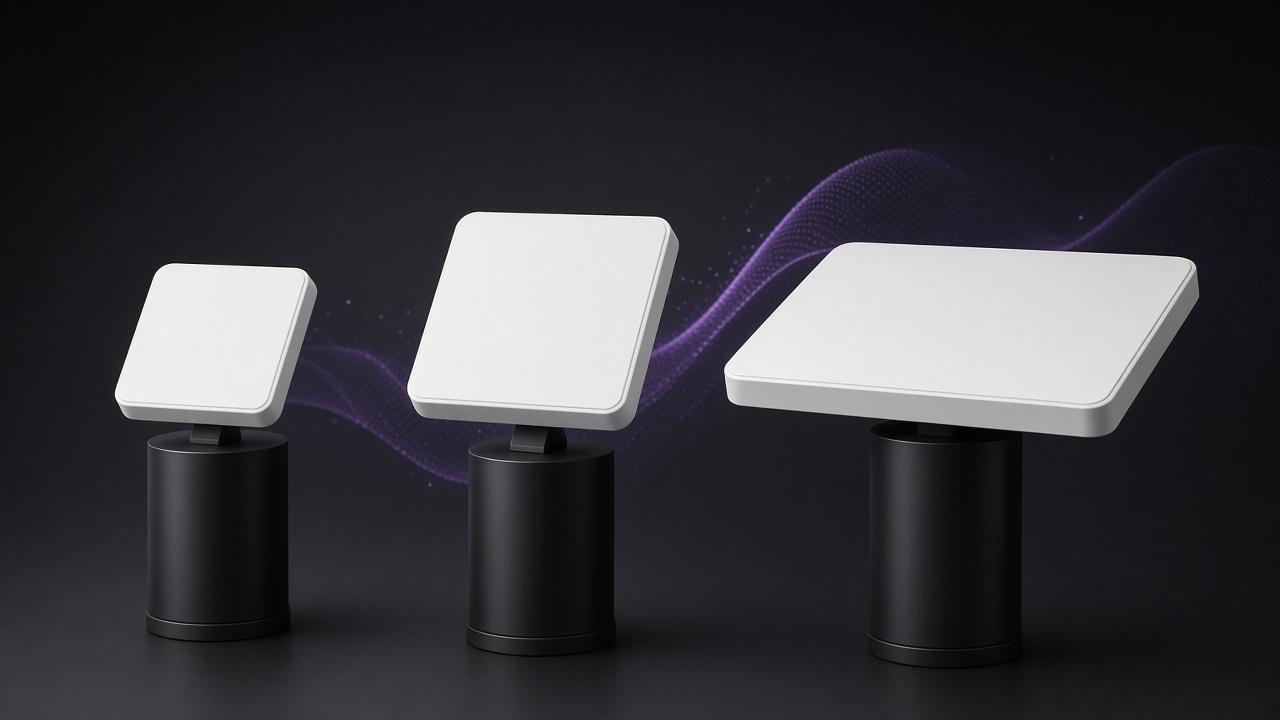
Amazon Leo (the satellite broadband service formerly developed under the Project Kuiper name) is showing a clear hardware story on its official Technology page: three in-house customer antennas sized for different jobs. If you are comparing portable travel gear, a home/small-business dish, or a high-capacity business/government panel, start with the lineup below — Nano, Pro, and Ultra — as published at leo.amazon.com/technology.
This guide focuses on what Amazon itself publishes for those terminals: download (and Ultra upload) claims, physical size, weight, and use cases. It does not invent latency, constellation counts, pricing, or availability dates that are not on that Technology page.
Shopping satellite or home internet now?
Amazon Leo terminals are not yet authorized for sale or lease. Compare what’s orderable today at your address while you watch Leo’s hardware lineup.
Three sizes, one in-house antenna family
Amazon’s Technology page positions the story simply: “Limitless possibility, now in three sizes.” Each Amazon Leo antenna is described as designed in-house to keep customers connected even in harsh environments. The practical takeaway for buyers and IT planners is a deliberate scale ladder:
- Amazon Leo Nano — smallest and lightest; portable 100 Mbps-class terminal.
- Amazon Leo Pro — compact mid-size; weather-tested 400 Mbps-class terminal for home or business.
- Amazon Leo Ultra — large thin panel; up to 1 Gbps down / 400 Mbps up for demanding business and government workloads.
That three-SKU structure is the differentiator to remember. Related RSINC pages cover launch timing, early satellites, and state-level coverage angles; this page is specifically about the Nano / Pro / Ultra customer terminals.
Amazon Leo Nano — fast and small
Amazon describes Nano as delivering up to 100 Mbps download in a 7 × 7-inch, 2.2-pound package — high-speed connectivity in a conveniently portable design.
On the same Technology page, Amazon says the smallest antenna is still powerful enough for 4K streaming, gaming, and video calls, and frames Nano as something you can take on the go when travel requires connectivity.
Who Nano fits (based on Amazon’s framing): travelers, temporary sites, and users who need a packable terminal more than a roof-mount workhorse — provided Amazon’s published speed class matches the apps you actually run.
Amazon Leo Pro — powerful and compact
Pro is marketed as the “best of both worlds”: faster speeds in a still-sleek form factor. Specs on the Technology page: up to 400 Mbps download, 11 × 11 inches, 5.3 lbs.
Amazon calls Pro a compact, weather-tested antenna designed for reliable, high-performance internet for home or business. The use-case pitch is simultaneous work and entertainment: stream in 4K, play games, and make video calls all at the same time.
Who Pro fits (based on Amazon’s framing): households and small sites that want more headroom than Nano without stepping up to Ultra’s industrial footprint and weight.
Amazon Leo Ultra — full speed ahead
Ultra is positioned for “uncompromising performance.” Amazon’s claim on the Technology page: fastest satellite connectivity speeds of up to 1 Gbps downloads and 400 Mbps uploads. Physical callouts: 20 × 30 × 1.9 inches and 43.0 lbs.
Amazon designs Ultra for demanding connectivity needs of business and government customers, including bandwidth-intensive applications such as connecting thousands of IoT sensors and hundreds of HD cameras. Amazon also links a Ultra reveal video from that Technology page for visual scale.
Who Ultra fits (based on Amazon’s framing): multi-camera sites, sensor-heavy industrial campuses, and government or enterprise locations that need both high download and the only upload figure Amazon publishes on this page (up to 400 Mbps).
Nano vs Pro vs Ultra — comparison table
Figures below are paraphrased from Amazon Leo’s Technology page. Speed metrics carry Amazon’s site-wide disclaimer (see next section).
| Terminal | Download claim | Upload claim | Size | Weight | Stated use / positioning |
|---|---|---|---|---|---|
| Amazon Leo Nano | Up to 100 Mbps | Not stated on Technology page | 7 × 7 in | 2.2 lbs | Smallest, portable; 4K streaming, gaming, video calls |
| Amazon Leo Pro | Up to 400 Mbps | Not stated on Technology page | 11 × 11 in | 5.3 lbs | Compact, weather-tested; home or business; simultaneous 4K / gaming / calls |
| Amazon Leo Ultra | Up to 1 Gbps | Up to 400 Mbps | 20 × 30 × 1.9 in | 43.0 lbs | Business / government; thousands of IoT sensors; hundreds of HD cameras |
Source: Amazon Leo — Technology. Upload speeds for Nano and Pro are not listed on that page; only Ultra’s upload claim appears there.
Important Amazon disclaimers (read before you plan a buy)
- Speeds are preliminary. Amazon states that speed metrics are based on limited preliminary testing and are not guaranteed. Actual speeds may vary by geography, weather, Wi-Fi performance, plan availability, network congestion and policy, and other factors.
- Not FCC-authorized for sale or lease yet. Amazon states the devices have not been authorized as required by FCC rules; they are not, and may not be, offered for sale or lease until authorization is obtained.
Until those authorizations and commercial plans are public, treat Nano / Pro / Ultra as Amazon’s published hardware roadmap — not as products you can order through RSINC or Amazon today.
Practical buyer notes
- Match size to workload, not marketing adjectives. Nano’s portability story is real on paper (7×7 in / 2.2 lbs), but Ultra’s IoT/camera pitch is a different class of site. Don’t buy “the big one” for a cabin that only needs video calls.
- Upload matters for cameras and backups. On the Technology page, only Ultra lists an upload claim (up to 400 Mbps). If your use case is heavy uplink (security video, cloud backup, live contribution), ask Amazon or your integrator for Nano/Pro upload expectations before you assume parity.
- Weather and mounting. Pro is explicitly called weather-tested for home or business. Ultra’s 43 lb panel implies a more permanent install than Nano’s travel-friendly package — plan mounts, power, and clearance accordingly once install guides exist.
- Don’t confuse brand history with product SKUs. Older coverage may still say “Project Kuiper.” Amazon’s Technology page brands the antennas as Amazon Leo Nano / Pro / Ultra. For SEO and shopping clarity, use Amazon Leo names when comparing terminals.
- Keep current service until Leo is orderable. Related RSINC coverage on launch timing and early satellites is useful context, but none of that replaces a live checkout for Starlink, 5G home, fiber, or cable at your ZIP today.
Need help comparing options while Leo ramps?
Soft guidance only — we map what’s available at your address; you confirm prices and contracts with the provider.
Bottom line
Amazon Leo’s official Technology page is a three-terminal showcase: Nano (up to 100 Mbps down; 7×7 in; 2.2 lbs; portable 4K/gaming/calls), Pro (up to 400 Mbps down; 11×11 in; 5.3 lbs; weather-tested home/business), and Ultra (up to 1 Gbps down / 400 Mbps up; 20×30×1.9 in; 43 lbs; business/government IoT and HD camera loads). Speeds come from limited preliminary testing and are not guaranteed, and the devices are not yet FCC-authorized for sale or lease. Use this lineup to understand Amazon’s hardware angle; use your ZIP and a live provider quote for internet you can install now.